
Polaroid Snap Manual: A Comprehensive Guide (Updated 02/12/2026)
This detailed manual, updated today – 02/12/2026 – provides comprehensive instructions for your Polaroid Snap camera, ensuring optimal usage and enjoyment of its features.
Welcome to the world of instant photography reimagined! The Polaroid Snap represents a modern take on the classic Polaroid experience, blending retro charm with contemporary technology. This compact and user-friendly camera allows you to capture and instantly print vibrant, full-color photos – no ink required!
This guide serves as your comprehensive companion, designed to unlock the full potential of your Polaroid Snap. Whether you’re a seasoned photographer or a first-time user, we’ll walk you through every aspect of the camera, from initial setup and operation to troubleshooting common issues.
Resources like central-manuals.com offer further support, providing access to the Polaroid Snap Touch User Guide in English, a valuable addition to this manual. Get ready to rediscover the joy of instant memories!
What is the Polaroid Snap?
The Polaroid Snap is a compact digital camera designed for instant gratification. Unlike traditional Polaroid cameras relying on chemical processes, the Snap utilizes Zero Ink Printing (ZINK) technology. This innovative system embeds cyan, magenta, yellow, and a protective clear coat within the ZINK paper itself, eliminating the need for messy ink cartridges.
Essentially, it’s a digital camera combined with a portable photo printer. You capture images digitally, then instantly print them on sticker-backed ZINK paper. The Polaroid Snap Touch, a related model, expands functionality with a touchscreen interface.
Available through resources like central-manuals.com, the user guide details its capabilities. It’s a fun, convenient way to create and share physical photos immediately, bridging the gap between digital convenience and tangible memories.
Key Features and Benefits
The Polaroid Snap boasts several compelling features. Its ZINK technology provides instant, full-color prints without ink, simplifying the printing process. The compact and lightweight design enhances portability, making it ideal for on-the-go photography. A built-in shutter button and simple mode dial offer user-friendly operation, catering to all skill levels.
Benefits include the convenience of immediate prints, perfect for sharing memories instantly. The sticker-backed prints allow for creative display options. Access to the Polaroid Snap app (if applicable) expands editing and sharing capabilities.
Resources like central-manuals.com provide detailed information. Ultimately, the Snap delivers a fun, accessible, and convenient way to capture and cherish life’s moments.
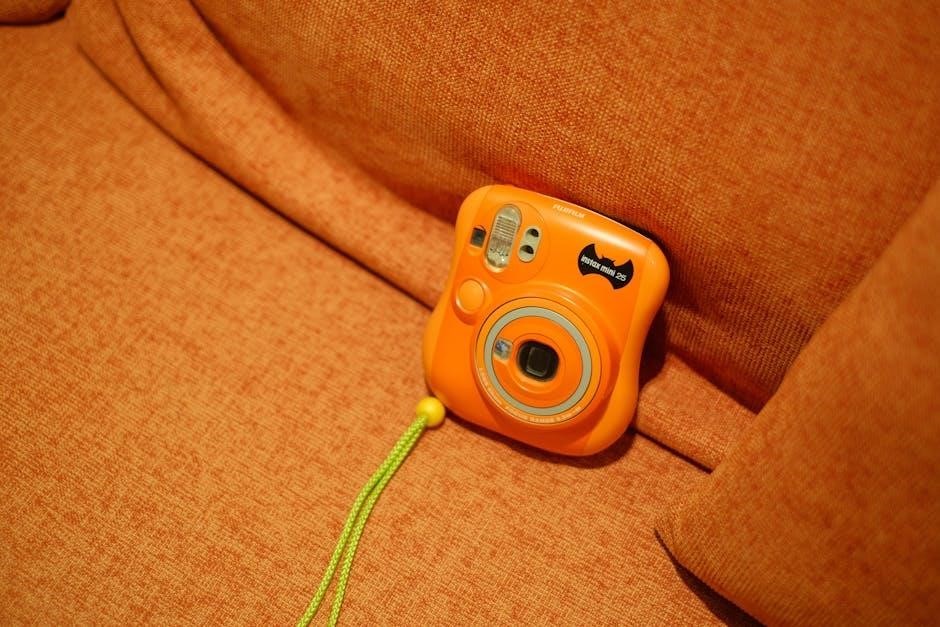
Getting Started with Your Polaroid Snap
Begin your Polaroid journey by unpacking your camera and preparing it for use, ensuring you have ZINK paper for instant photo printing enjoyment.
Unboxing and Initial Setup
Carefully remove your Polaroid Snap camera and all included accessories from the packaging. You should find the camera itself, a ZINK paper pack (quantity may vary), a Micro-USB charging cable, and this user manual. Before first use, inspect the camera for any visible damage that may have occurred during shipping.

Remove any protective films from the camera body and the ZINK paper pack; Ensure the camera’s battery has some initial charge, though a full charge is recommended before extensive use. Familiarize yourself with the camera’s basic layout – locate the power button, shutter button, mode dial, and ZINK paper compartment. Refer to the diagrams within this manual for clear identification of each component. Proper initial setup ensures a smooth and enjoyable experience with your new Polaroid Snap!
Charging the Camera
To charge your Polaroid Snap, connect the included Micro-USB cable to the charging port on the camera, typically located on the side or bottom. Plug the other end of the cable into a powered USB port on a computer, wall adapter, or other USB power source. A charging indicator light will illuminate, usually red, to indicate that charging is in progress.
Allow approximately 2-3 hours for a full charge. The indicator light will typically change to green (or turn off) when charging is complete. Avoid using the camera while it is charging. It’s recommended to fully charge the camera before initial use and periodically to maintain optimal performance. Disconnect the charging cable once fully charged to preserve battery health and prevent overcharging.
Inserting and Loading ZINK Paper
The Polaroid Snap utilizes ZINK (Zero Ink) paper, which contains embedded dye crystals that activate during the printing process. To load the paper, locate the paper compartment, usually accessed by a latch on the side or back of the camera. Open the compartment and insert a stack of ZINK paper, ensuring the glossy side faces up.
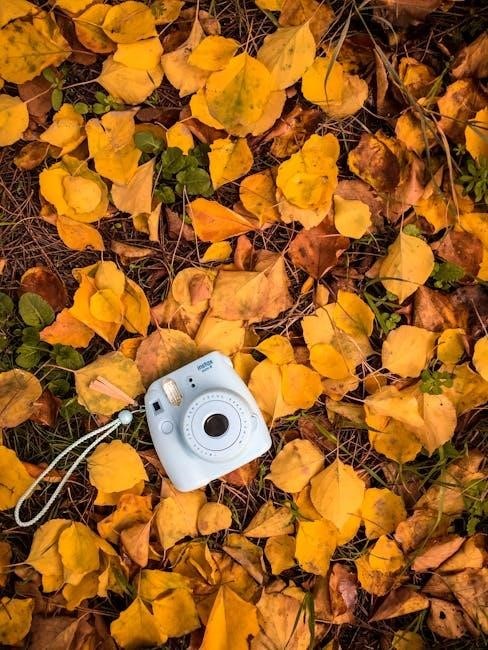
The camera will automatically detect the presence of the paper. Do not force the paper in; it should slide in smoothly. Ensure the paper is properly aligned within the compartment to prevent jams. The number of sheets remaining will often be displayed on the camera’s screen. Only use genuine Polaroid ZINK paper for optimal print quality and to avoid damaging the camera.

Understanding the Camera Controls
Familiarize yourself with the Snap’s intuitive controls – power, shutter, mode dial, and flash settings – to fully harness its capabilities for capturing memories.
Power Button and Operation
The Polaroid Snap’s power button is strategically located for easy access, typically on the side or top of the camera body. A short press activates the camera, indicated by a power-on light or screen illumination. Holding the power button down for a few seconds initiates the shutdown sequence.
Upon powering on, the camera will briefly self-check, preparing for operation. If the camera doesn’t respond after pressing the power button, ensure it’s adequately charged – see the ‘Charging the Camera’ section for details. The camera may also feature an auto-power off function to conserve battery life when inactive for a specified duration. This feature can usually be adjusted within the camera’s settings, if available.
Shutter Button and Modes
The shutter button on your Polaroid Snap is the primary control for capturing images. A gentle press focuses the camera, while a full press initiates the photo-taking process. The camera typically provides visual or auditory feedback confirming a successful capture. Beyond standard photo mode, the Snap often includes various shooting modes accessible via a mode dial or menu system.
These modes may encompass video recording, black and white photography, or potentially creative filters. Understanding each mode’s function is crucial for achieving desired results. Experimenting with different modes unlocks the camera’s full creative potential. Refer to the ‘Mode Dial Functions’ section for a detailed breakdown of each available option and their specific characteristics.
Mode Dial Functions (Photo, Video, Black & White, etc.)
The Polaroid Snap’s mode dial offers diverse creative options; The ‘Photo’ mode is the standard setting for full-color instant prints. ‘Video’ mode enables short video clips, though recording limitations may apply (see ‘Exploring Video Recording’). Selecting ‘Black & White’ produces classic monochrome images, offering a nostalgic aesthetic.
Additional modes, if available, might include ‘Sepia’ for vintage tones or ‘Vintage’ for simulated Polaroid effects. Each mode alters the camera’s processing, impacting the final print. Experimentation is encouraged to discover preferred styles. The specific modes present depend on the Snap model; consult the camera’s display or accompanying documentation for a complete list and detailed descriptions of each function.
Flash Settings
The Polaroid Snap incorporates a built-in flash to enhance image brightness in low-light conditions. Flash settings are typically controlled via a dedicated button or within the camera’s menu system. Options generally include ‘Auto,’ ‘On,’ and ‘Off.’ ‘Auto’ mode allows the camera to determine when flash is necessary, optimizing for balanced exposure.
Selecting ‘On’ forces the flash to fire with every shot, useful for overcoming strong backlighting or ensuring consistent illumination. ‘Off’ disables the flash entirely, preserving natural lighting and avoiding unwanted reflections. Be mindful that flash can sometimes wash out colors or create harsh shadows; experimentation is key to achieving desired results. Consider ambient light levels when choosing a flash setting.

Taking Photos with Your Polaroid Snap
Capture life’s moments effortlessly with the Polaroid Snap! This section details basic photo capture, self-timer usage, and understanding ZINK paper for optimal prints.
Basic Photo Capture
Taking a photo with your Polaroid Snap is incredibly straightforward, designed for instant gratification. First, ensure the camera is powered on using the power button. Frame your subject within the viewfinder – remember that what you see is what you’ll get! Gently press the shutter button; a full press initiates the capture process. You’ll hear a brief sound confirming the photo has been taken.
The Polaroid Snap instantly prints the captured image onto ZINK paper. The printing process begins immediately after the shutter is pressed, delivering a physical print within seconds. Be mindful of the surrounding environment and avoid obstructing the paper ejection slot during printing. For best results, maintain a steady hand during capture to minimize blur. Experiment with different angles and compositions to unleash your creativity!
Using the Self-Timer
The Polaroid Snap’s self-timer feature is perfect for group photos or capturing yourself in the moment. To activate it, navigate to the camera’s mode settings – typically accessed via the mode dial. Select the self-timer option; the camera will usually indicate activation with a flashing light. A standard delay is around 10 seconds, giving you ample time to join the frame.
Once activated, the camera will automatically capture a photo after the set delay. Ensure everyone is positioned and ready before the timer counts down. The self-timer is a fantastic tool for solo adventurers or when you need both hands free. Remember to check the remaining ZINK paper before initiating the self-timer to avoid any surprises!
Adjusting Exposure (If Applicable)
While the Polaroid Snap is designed for simplicity, some models offer limited exposure adjustment capabilities. If your Snap features this functionality, it’s usually accessed through the camera’s settings menu, often indicated by a sun or brightness icon. Exposure control allows you to brighten or darken your images, compensating for challenging lighting conditions.
Increasing exposure is useful in low-light scenarios, making the photo brighter, but be cautious of overexposure, which can wash out details. Decreasing exposure is helpful in bright sunlight, preventing images from becoming too pale. Experiment with small adjustments to achieve the desired look. Remember that ZINK paper has inherent limitations, so extreme exposure changes may not yield optimal results.
Understanding ZINK Paper and Print Quality
The Polaroid Snap utilizes ZINK (Zero Ink) paper, a unique technology embedding dye crystals within the paper itself. Heat activates these crystals during printing, creating the image – no ink cartridges are needed! Print quality is directly linked to the ZINK paper’s quality; always use genuine Polaroid ZINK paper for best results.
Expect vibrant colors and decent detail, though ZINK prints aren’t comparable to professional lab photos. Factors like lighting and the paper’s storage conditions can affect print vibrancy. Store ZINK paper in a cool, dry place, away from direct sunlight. Slight variations in color or minor imperfections are normal due to the ZINK process.

Exploring Video Recording
The Polaroid Snap allows for quick video capture, offering a fun way to document moments beyond still photography, though with certain limitations.
Recording Video with the Polaroid Snap
Initiating video recording on your Polaroid Snap is straightforward. Ensure the camera is powered on and the mode dial is set to the video recording option. Pressing the shutter button will commence recording; a visual indicator, typically a flashing red light, confirms active recording. The Polaroid Snap captures video in a specific resolution and frame rate, designed for quick, shareable clips rather than professional-grade footage.
Keep in mind the camera’s limitations regarding video length. The Polaroid Snap isn’t intended for extended recordings. The maximum recording time per clip is relatively short, encouraging users to capture brief, spontaneous moments. To stop recording, simply press the shutter button again. The recorded video will then be available for viewing on the camera’s display and can be transferred to a computer for storage or sharing.
Video Recording Limitations
The Polaroid Snap’s video capabilities, while convenient, are subject to certain limitations. Primarily, the camera’s internal storage capacity restricts the total recording time available. Expect relatively short video clips, ideal for quick snapshots rather than lengthy recordings. Furthermore, the video resolution is optimized for sharing and immediate viewing, not for professional-quality production.
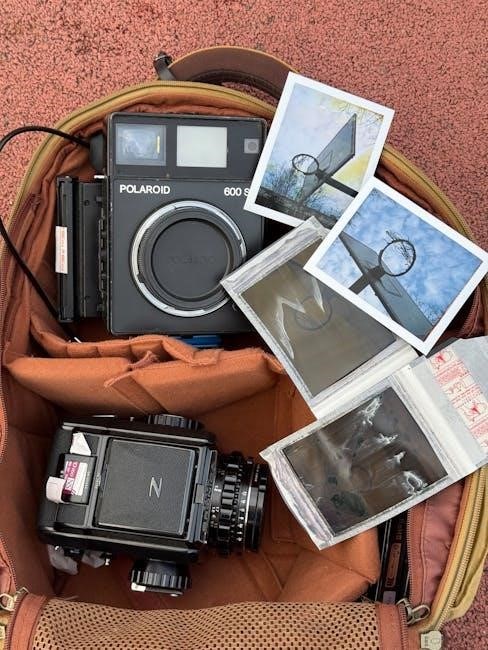
Battery life also impacts video recording duration. Continuous video capture drains the battery faster than still photography. The camera may also exhibit some performance constraints during extended recording sessions, potentially leading to overheating or reduced frame rates. Finally, the Polaroid Snap lacks advanced video features like image stabilization or external microphone support, further defining its limitations as a casual video device.

Connectivity and Software
Connect your Polaroid Snap to computers via USB for image transfer and explore companion apps for enhanced editing and sharing capabilities, if available.
Connecting to a Computer via USB
To connect your Polaroid Snap to a computer, you’ll need a standard USB cable (often a Micro-USB, depending on your Snap model). Ensure your camera is powered off before connecting. Once connected, power on the camera; your computer should recognize it as a removable storage device.
You may be prompted to select a connection mode on the camera – typically, options include “Mass Storage” or “PTP” (Picture Transfer Protocol). “Mass Storage” allows you to directly access and copy files like any USB drive. “PTP” is often preferred for importing photos directly into photo management software.
Locate the DCIM folder on the camera’s storage to find your captured photos and videos. Safely eject the camera from your computer before disconnecting the USB cable to prevent data corruption. Note that some older operating systems might require specific drivers, though this is less common with modern systems.
Using the Polaroid Snap App (If Applicable)
The Polaroid Snap App, if available for your specific model, enhances your camera experience with additional features and control. Download the app from your device’s app store (iOS or Android) and follow the on-screen instructions for installation.
Pairing typically involves enabling Bluetooth on both your camera and your mobile device. Within the app, you can remotely control the camera, preview images, edit photos with filters and adjustments, and transfer photos wirelessly to your device for easy sharing.
The app may also offer features like creating collages, adding stickers, and directly uploading to social media platforms. Regularly check for app updates to ensure compatibility and access to the latest features and improvements. Refer to the app’s built-in help section for detailed guidance.
Software Updates and Firmware
Maintaining up-to-date software and firmware is crucial for optimal Polaroid Snap performance and access to new features. Check the official Polaroid website regularly for available updates specifically designed for your Snap model. Updates often address bug fixes, improve compatibility, and enhance overall camera functionality.
To update the firmware, you’ll typically need to connect your camera to a computer via USB. Follow the instructions provided on the Polaroid website carefully during the update process; interrupting it could potentially damage your device.
The Polaroid Snap App, if applicable, may also prompt you about available firmware updates. Regularly updating ensures a smoother, more reliable, and feature-rich experience with your Polaroid Snap camera.

Troubleshooting Common Issues
This section addresses frequent problems like paper jams, power failures, poor print quality, and connectivity difficulties with your Polaroid Snap camera.
Paper Jam Solutions
Experiencing a paper jam with your Polaroid Snap can be frustrating, but often easily resolved. First, always power off the camera before attempting any intervention. Gently open the ZINK paper compartment and carefully remove any visible torn or crumpled paper fragments. Avoid using sharp objects that could damage the camera’s internal components.
Ensure the ZINK paper stack is loaded correctly, with the glossy side facing up. Check for any obstructions within the paper path. If the jam persists, try reloading a fresh pack of ZINK paper. A partially used pack might contribute to feeding issues. If these steps fail, consult the Polaroid support website for detailed diagrams and further assistance. Remember, forcing the paper can cause lasting damage.
Camera Not Powering On
If your Polaroid Snap isn’t powering on, begin with the simplest solutions. Confirm the camera has been adequately charged using the provided USB cable and a functioning power source. A full charge can take several hours, so allow sufficient time. Inspect the USB port on both the camera and your computer for any debris or damage.
Try a different USB cable and power adapter to rule out a faulty connection. If the camera still doesn’t respond, perform a hard reset by holding the power button for approximately 10-15 seconds. If this fails, contact Polaroid customer support, as internal component failure may require professional attention. Do not attempt to disassemble the camera yourself.
Print Quality Problems
Suboptimal print quality with your Polaroid Snap often stems from ZINK paper issues. Ensure you’re using genuine Polaroid ZINK paper, as off-brand alternatives can produce faded or incorrect colors. Check the paper’s expiration date; expired paper may yield poor results. Verify the ZINK paper is loaded correctly, with the blue backing facing downwards.
Clean the camera’s paper feed path with a soft, dry cloth to remove any dust or debris. If prints are consistently streaky, try running a test print to clean the print head. Adjust image brightness within the Polaroid Snap app (if applicable) before printing. If problems persist, contact Polaroid support for further assistance.
Connectivity Issues
Experiencing trouble connecting your Polaroid Snap to a computer via USB? First, ensure you’re using a compatible USB cable and port. Try a different USB port on your computer, avoiding USB hubs if possible. Verify the camera is powered on and in the correct mode for USB connectivity – consult the manual for specific instructions.
If the camera still isn’t recognized, restart both the camera and your computer. Check for driver updates for your Polaroid Snap on the Polaroid website. For app connectivity, confirm Bluetooth is enabled on both your camera and mobile device. Ensure the Polaroid Snap app has the necessary permissions granted within your phone’s settings.